(044) 222 33 33


Gnathology
Gnathology is a branch of dentistry that deals with the treatment of the temporomandibular joint (TMJ), bite, masticatory muscles and the harmony of the entire dento-maxillary system. Disorders in this area often manifest as clicking in the joint, jaw pain, grinding of teeth, headaches or chronic fatigue when chewing.
At Astra Dent dental centers, gnathological treatment is carried out in accordance with European standards – using digital diagnostics, individual caps, myofunctional therapy and a comprehensive approach with the participation of related specialists (orthodontists, therapists, orthopedists).
The main goal of a gnathologist is not just to eliminate the symptoms and dysfunction of the TMJ, but to restore the correct interaction of the jaws, muscles and teeth and improve the patient’s quality of life.
Prices for services
-
Consultation with a gnathologist 1600 UAH
-
Treatment with a muscle relaxant 15000 UAH
-
Kois Deprogrammer Appliance (Lab-Built) 6000 UAH
-
Deprogramming (using a clinically manufactured deprogrammer) 1000 UAH
-
Gnatological mouthguard 2 category 32500 UAH
-
Gnatometry 6330 UAH
-
Condylography 32500 UAH
-
TENS therapy 3360 UAH
Doctors

 3 years of experience
Gnathologist, Orthopedist
 8 years of experience
 9 reviews
Orthopedic surgeon, Surgeon, Gnathologist
Our branches
- Velyka Vasylkivska (ex. Lva Tolstogo)Inclusive
 +38(044)2223333
 25 Velyka Vasylkivska str.
MON - SUN: 9.00 - 21.00
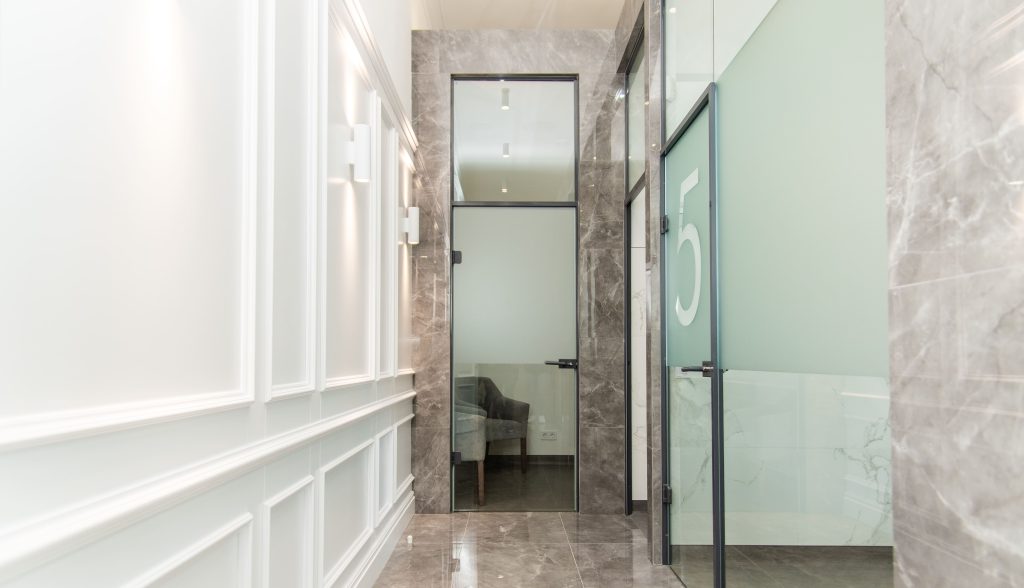
- Darnytsia Metro (DOMA Center shopping center)Inclusive
+38(044)2223333
40 Budivelnykiv Street
MON - SUN: 9.00 - 21.00
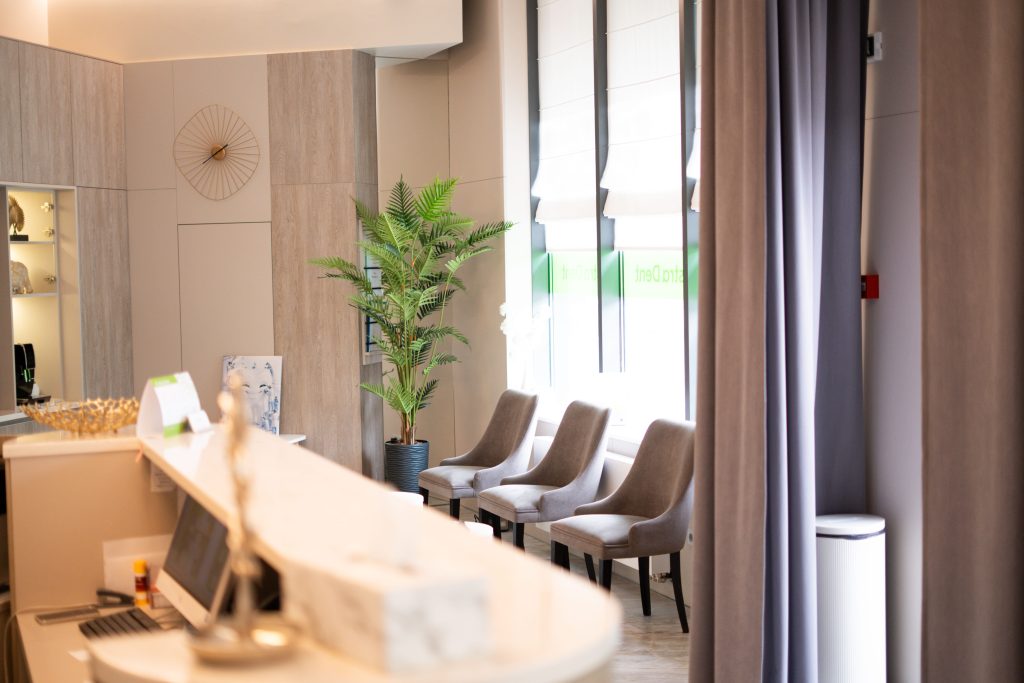
Astra Dent in Kyiv
Advantages of gnathological treatment at Astra Dent
In the gnathological direction, Astra Dent uses high-precision equipment that allows us to diagnose and correct even minor disorders of the maxillofacial apparatus:
- T-Scan — a digital occlusion diagnostic system for analyzing the force and symmetry of chewing pressure;
- Intraoral scanners — for building a digital bite model without casts;
- Carl Zeiss — microscopes for precise control during restorations or endodontic intervention;
- Kavo and Sirona — premium-class dental units with adaptation for long-term procedures.
Special attention should be paid to the fact that gnathological and orthodontic treatment is also performed at the Astra Clinic hospital, which is the clinical base of the Department of Maxillofacial Surgery and Modern Dental Technologies of the Bogomolets National Medical University. Here, patients are consulted not only by gnathologists, but also by maxillofacial doctors, which is especially important in complex or interdisciplinary cases, when functional changes are combined with anatomical features.
Experienced doctors with many years of practice
The network employs specialists with experience from 7 to 34 years, who are constantly improving their knowledge by undergoing training in Ukraine and abroad. Doctors involved in gnathological treatment also have training in related areas – orthodontics, orthopedics, therapy and maxillofacial surgery.
Individual approach to each patient
Gnathological treatment at Astra Dent never begins without diagnosis.
Each patient undergoes:
- a comprehensive assessment of the bite, muscle function, jaw movements;
- a medical history is taken, analysis of concomitant diseases (neurology, dental history, orthodontic past);
- in complex cases – a multidisciplinary consultation with the participation of a surgeon, orthodontist and therapist.
Comfortable conditions and a safe environment
All Astra Dent offices are created with the patient’s physical and psychological comfort in mind:
- modern bright offices with ergonomic chairs for long-term treatment;
- departments with barrier-free access — patients with special needs can visit the gnathologist without difficulty;
- detailed communication with the doctor — each step is explained, the patient fully understands what is happening and why;
- the contact center works 24/7 — no waiting, convenient schedule and confirmation of visits.
Indirect signs of problems with the maxillofacial apparatus
Many patients have been seeing neurologists for years because of pain in the ears, neck or back, not suspecting that the real cause is dysfunction of the temporomandibular joint. In such cases, not painkillers will help, but a consultation with a gnathologist — a doctor who diagnoses and treats functional disorders of the jaw apparatus.
How to understand that the problem is in the temporomandibular joint?
In addition to general complaints related to a headache or discomfort in the neck, there are a number of characteristic symptoms that indicate a violation of the TMJ:
- jaw pain when chewing or talking;
- clicking of the jaw, crunching or friction in the joint when opening the mouth;
- limited or asymmetrical opening of the mouth;
- bruxism (night clenching or grinding of the teeth);
- malocclusion, a feeling of displacement of the jaw;
- pathological abrasion of teeth, chipped fillings, restorations, crowns;
- fatigue of chewing muscles, heaviness in the lower part of the face.
In most cases, the patient cannot independently determine the source of the problem, since the symptoms are similar to neurological, muscular or dental.
If you recognize yourself in these descriptions, you should consult a gnathologist at Astra Dent.
What can cause TMJ disorders?
Problems with the joint are not always associated with congenital anomalies. The most common causes:
- Mechanical injuries to the face or jaw. Even minor injuries can cause a displacement of the joint disc or muscle spasm.
- Removal of teeth without subsequent prosthetics. When teeth are lost, the load on the joint becomes uneven, which leads to its overload and imbalance of the bite.
- Malocclusion. Congenital or acquired — forces the jaw to work under tension, which over time provokes pain, clicking and abrasion of the teeth.
- Improperly made fillings or crowns. Even an excess of 0.1 mm can change the load distribution, disrupt the occlusion and cause joint overstrain.
- Incorrect orthodontic treatment. If the orthodontist focuses only on aesthetics, without taking into account the functional balance of the jaw, this can cause TMJ displacement.
- Neurogenic factors. Spasm of the facial muscles, cervical region or dysfunction of the masticatory muscles can cause chronic joint dysfunction.
How are the diagnostics carried out by a gnathologist at Astra Dent?
At Astra Dent dental centers, gnathological diagnostics are carried out according to European clinical protocols. The first appointment always begins with a detailed collection of information in order not to simply identify symptoms, but to determine their true source.
Consultation and primary diagnosis
At the beginning, the gnathologist conducts:
- Collection of anamnesis — symptoms, duration of complaints, previous dental or orthodontic treatment, presence of stress, bad habits, previous injuries are clarified.
- Analysis of the patient’s complaints — pain, clicking, grinding, discomfort when chewing or talking, morning muscle fatigue, headaches, tinnitus.
- Clinical examination of the oral cavity — assessment of facial symmetry, enamel wear, tooth position, condition of fillings and dentures, check of the bite.
Functional tests and instrumental methods
After collecting complaints, the gnathologist performs a number of clinical tests and, if necessary, involves instrumental studies:
Palpation of the temporomandibular joints
The doctor gently presses on the area of the joint and the muscles around it — this allows to identify local pain points, asymmetry, spasm or clicking during movement.
Assessment of the amplitude of jaw movements
It is measured how wide the patient can open their mouth, whether there is a restriction or deviation of the lower jaw to the side. This helps to determine functional limitations.
Occlusal analysis
The doctor checks:
- the uniformity of tooth closure;
- the presence of premature contacts;
- the state of chewing movements and the balance between the left and right sides. If necessary, T-Scan is used — a digital occlusion analysis system that records the force and duration of contacts in real time.
Axiography
Used when joint dysfunction is suspected. This is a digital study that records the trajectories of jaw movement and allows to see abnormalities in the joint during opening, chewing, and closing. Astra Dent uses electronic axiographs for accurate spatial analysis.
Additional examinations
If there is a need for detailed anatomy, the following may be prescribed:
- Computed tomography (CT) to assess the structure of the joint, the presence of changes in bone tissue,
- Magnetic resonance imaging (MRI) to visualize soft tissue structures (disc, ligaments, muscles).
Diagnosis and treatment planning
At Astra Dent, gnathological treatment begins with an accurate determination of the causes of the problem, not just the elimination of its symptoms. The diagnosis is made based on the data of the initial examination, functional tests, analysis of the patient’s complaints, and the results of additional examinations – X-ray, CT, axiography, or occlusal scanning.
The doctor takes into account not only local manifestations (clicking, pain, movement restrictions), but also the general condition of the chewing apparatus, the nature of the load on the joints, muscle coordination, previous orthodontic or orthopedic intervention.
Individual approach to planning
After establishing the diagnosis, the gnathologist forms a personalized treatment plan, which may include:
- production of an individual unloading gnathological mouthguard;
- grinding of excess contacts (selective occlusal correction);
- myofunctional therapy;
- physiotherapy or exercises for muscle balance.
In complex clinical cases, other Astra Dent specialists may be involved in the planning:
- orthodontist – if necessary, bite correction;
- orthopedist – if necessary, restoration of bite height, replacement of dentures, restorations or inlays;
- maxillofacial surgeon – if the joint requires invasive intervention (for example, in case of ankylosis, severe deformities or recurrent dislocations).
A team approach allows taking into account all anatomical, functional and aesthetic aspects of the patient’s condition and achieving a long-term stable result without overloading the joints.
How is gnathological treatment carried out at Astra Dent?
After establishing the diagnosis, the gnathologist draws up an individual treatment plan based on the functional needs of the joint, the condition of the dento-maxillary system and the general condition of the patient. Treatment is carried out in stages, with mandatory monitoring of changes and regular correction.
Gnathological mouthguards (splints)
These are individual orthopedic structures made of solid biocompatible material. Their main task is to redistribute the load, relax the masticatory muscles, stabilize the joint and normalize the position of the lower jaw.
Astra Dent manufactures different types of splints, depending on the needs:
- Repositioning splint. Used to change the position of the head of the lower jaw in the joint fossa. Allows the dentist to return the disc to its physiological position and influence the biomechanics of the joint.
- Decompensation splint. Reduces intra-articular pressure, relieves the disc and capsule, and reduces pain. Often used at the initial stage of treatment for acute symptoms.
- Positioning mouthguard. Aims at the displacement of the disc when clicking or locking. Allows the doctor to control the movement of the jaw and gradually normalize joint function.
- Centering splint. Used after active treatment – fixes the achieved position of the jaw and joint, stabilizes the result. Often part of the preparation for orthodontic or orthope dic intervention.
What do mouthguards look like and how to wear them correctly?
Modern gnathological mouthguards (splint therapy) are transparent, anatomically adapted products made of hard medical plastic. They are made individually for each patient and are tightly fixed on the teeth. Mouthguards are practically invisible in the mouth, do not cause discomfort when worn and do not disrupt speech or breathing.
The mouthguard should be worn mainly at night or according to a special schedule determined by the doctor. Usually it is removed only during meals, hygienic brushing of teeth or rinsing the mouthguard itself.
The Astra Dent network has its own dental laboratory, which allows us to make mouthguards quickly, accurately and without additional waiting. This is especially important when the treatment requires gradual correction of the structure.
You can view the current cost of diagnostics and gnathological treatment in the “Price list” section or below on this page.
Physiotherapy treatment
According to indications, the gnathologist may prescribe:
- laser therapy;
- microcurrent therapy;
- myofunctional exercises;
- thermal applications or muscle relaxation.
These methods help reduce pain, improve blood circulation, relieve muscle spasm and accelerate the restoration of jaw mobility.
Drug therapy
In acute phases, the following may be prescribed:
- nonsteroidal anti-inflammatory drugs (NSAIDs) – to reduce inflammation and pain;
- muscle relaxants – to eliminate muscle spasms;
- vascular drugs or B vitamins – to improve innervation and tissue trophism.
All prescriptions are made taking into account the patient’s general condition, history and existing contraindications.
Control and correction of treatment
Gnathological treatment is a dynamic process in which constant observation is important. At Astra Dent, the patient visits the doctor at regular intervals, usually every 2-3 weeks in the first stages.
During the visits:
- the condition of the joint, occlusion, muscle tone is assessed;
- changes are made to the mouthguard (grinding, replacement);
- the wearing schedule is adjusted;
- if necessary, additional examinations are prescribed or the treatment strategy is changed.
This approach allows us to respond to changes in a timely manner and achieve a stable result without complications.
Completion of treatment and prevention of relapses
The gnathologist completes treatment when:
- painful symptoms disappear;
- the joint works symmetrically and without clicking;
- the position of the lower jaw is stabilized;
- the occlusion of the teeth is normalized;
- no relapse is observed during loading.
After the treatment is completed, the patient receives individual recommendations that help maintain the result:
- regular preventive examinations by a gnathologist (once every 6-12 months);
- maintaining oral hygiene, especially in the presence of mouthguards or orthopedic structures;
- avoiding bad habits – gnawing on objects, bruxism (night clenching of teeth), improper chewing on only one side;
- maintaining the correct position of the head and neck, ergonomics of the workplace, especially for people with sedentary professions.
Where to sign up for a consultation with a gnathologist?
You can undergo an initial consultation and gnathological examination at one of the Astra Dent dental centers in Kyiv and Lviv.
You can make an appointment at a convenient time:
- by phone: (044) 222 33 33, (066) 222 33 33, (073) 222 33 33.
- or online – via the appointment form on the website.
Our administrators will select the center closest to you and make an appointment for a consultation without queues and expectations.
Accessible to everyone – barrier-free dentistry
The Astra Dent network has 16 dental centers in Kyiv and one branch in Lviv.
Adapted offices – for a safe and comfortable reception
Our network has specially equipped dentistry for barrier-free access, which is convenient for patients:
- with disabilities;
- after operations;
- with baby strollers;
- with temporary restrictions on movement.
These branches are located at the following addresses:
- Svyatoshynskyi district — 3a Svyatoshynska st.
- Darnytskyi district — 152 Kharkivske highway.
- Holosiivskyi district — 100-A Vasylkivska st.
- Dniprovskyi district — 40 Budivelnykiv st. (clinic with a special elevator).
If you need a consultation with a gnathologist in Kyiv — contact Astra Dent. We work where it is convenient for you. Just choose the nearest dental office — and come to the appointment in comfortable, safe conditions.
Why 250,000+ patients choose Astra Dent
-

Everything your smile needs — in one place
From preventive care and cavity treatment to implants and aesthetic dentistry.
-

A team of 150+ experienced doctors
Continuously trained in Ukraine and internationally, working with world-class equipment.
-

Convenience for the whole family
We treat both adults and children across all districts of the capital.
Need a consultation?

Book a free consultation
Please submit your phone number, and we'll contact you to schedule a convenient time for your visit
Alex
Coordinator
 info@astradent.ua
 Get a free consultation
-
 Open daily from 9 AM to 9 PM
 -
 No days off
 -
 Always powered