(044) 222 33 33


Children’s caries treatment
Caries is the most common dental disease in children, which develops rapidly due to the characteristics of the enamel of milk teeth. Timely treatment is important not only for the preservation of the tooth, but also for the proper development of the jaw, diction and the formation of a permanent bite. Untreated caries can lead to pain, inflammation and even damage to the rudiments of permanent teeth. Therefore, at the first signs of darkening of the enamel or complaints of sensitivity by the child, you should contact a pediatric dentist.
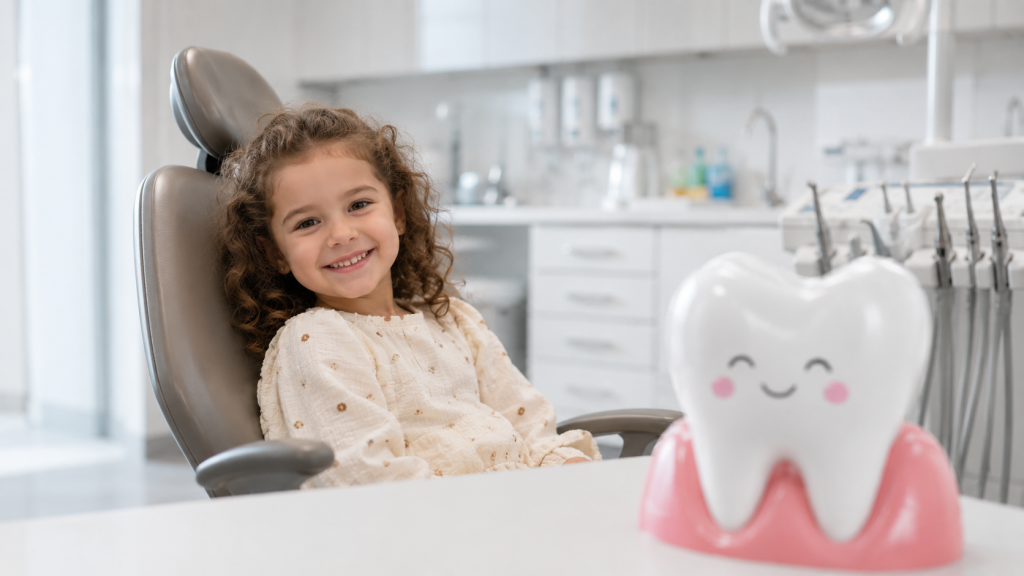
In Astra Dent dentistry, children are treated by doctors who specialize in pediatric dentistry – from infants to adolescents. For diagnostics, digital sensors are used that reduce radiation exposure, and treatment is carried out using gentle methods – without pain, fear and in comfortable conditions. Doctors explain each stage to both parents and children.
In complex cases, treatment in a medically induced sleep is possible. All materials are certified, safe and adapted to children’s enamel. Astra Dent departments have a waiting area for children, and a flexible system of discounts and promotions is also in place.
What is caries in children and why should it not be ignored?
Caries in children is an infectious lesion of tooth enamel that progresses rapidly due to the anatomical features of baby teeth. The enamel in children is thinner, and the pulp is located closer to the surface, so even a minor lesion can quickly go into deep tissues. The idea that “a baby tooth will fall out anyway” is erroneous and dangerous. Carious lesions are a source of chronic inflammation that not only causes pain and discomfort, but also affects the child’s general health.
The consequences of untreated caries can be serious:
- Development of complications – pulpitis, periodontitis, granulomas.
- Violation of the formation of permanent teeth – infection can damage the embryo, cause a change in position or delay eruption.
- Inflammatory processes – caries can lead to abscesses, phlegmons, and in rare cases – even sepsis.
- Impact on the body as a whole – due to a chronic focus of infection, headaches, decreased immunity, sleep and appetite disorders may occur.
- Digestive problems – pain during chewing forces the child to swallow food unchewed, which puts a strain on the gastrointestinal tract.
- Psycho-emotional consequences – constant pain or fear of visiting the dentist form negative experiences and phobias for years.
Even one carious tooth is not a local problem, but a risk factor for the entire child’s body. That is why treatment should be timely, professional and preferably – in an environment that takes into account the age and psychological characteristics of the child.
Why do parents choose Astra Dent for the treatment of caries in children
The Astra Dent network employs doctors who specialize in pediatric dentistry. Their clinical experience ranges from 7 to 34 years. All dentists have undergone specialized training in child psychology, have certificates from training in Ukraine and abroad (Italy, Poland, Germany). The departments have endodontists with experience working with a microscope, which is important in the treatment of complicated caries in children.
Psychological approach to the child
Doctors work on the principle of adaptation – first they get to know the child, show the tools in the form of a game, explain the actions in an understandable form. During the treatment, you can choose a cartoon on the ceiling, hold a favorite toy or sit with your parents. After the visit, the child receives a small gift or a “well done” diploma, which reduces fear of the next appointment. Each office has a friendly atmosphere without pressure, and doctors do not use words that can scare.
Modern equipment and technologies
For the treatment of childhood caries, the following are used:
- laser tips – without vibration and pain;
- Zeiss microscope – for precise treatment of complex cases;
- digital x-rays with minimal radiation exposure;
- ozonization devices for non-invasive enamel treatment;
- computer anesthesia STA instead of a conventional syringe.
This allows for quick, painless treatment without additional stress for the child.
Safety and sterility
Astra Dent adheres to international sterilization standards (EN 13060, ISO 17665). Class B autoclaves (Melag, Euronda) are used, sterile instruments are stored in sealed bags. All surfaces are treated after each patient, and materials are disposable, including saliva ejectors, wipes, gloves and tips. Children are not offered anything that has already been used.
Individual approach to each child
Before treatment, the doctor conducts a detailed conversation with the parents, takes into account the child’s age, emotional state, previous experience and pain level. In difficult or alarming cases, adaptation visits or short sessions are planned. If necessary, treatment in a medically induced sleep is used under the supervision of an anesthesiologist. Each child receives his own treatment plan, and decisions are made together with the parents.
Comfortable atmosphere in each department
The Astra Dent dental space is designed with the needs of children in mind:
- light interiors in calm colors;
- separate play areas with books, toys, and soft chairs;
- TVs with cartoons in the waiting rooms and offices;
- friendly staff at the reception.
All these factors help children relax before the start of the appointment and not be afraid to come back next time.
Causes of childhood caries
- Improper oral hygiene. Teeth are brushed irregularly or poorly, plaque accumulates, and bacteria destroy enamel.
- Excessive consumption of sweets and carbohydrates. Sugar is the main source of nutrition for cariogenic bacteria, especially with frequent snacks.
- Features of the structure of the enamel of milk teeth. It is thinner and less mineralized, so it is destroyed faster even with a slight lesion.
- Lack of fluoride and calcium. These elements are needed to strengthen enamel, their deficiency makes teeth more vulnerable.
- Heredity. Weak enamel, saliva composition or a tendency to accumulate plaque can be genetically transmitted.
- Reduced immunity. Frequent colds, chronic diseases and antibiotics affect the protective functions of saliva and the oral microflora.
- “Bottle” caries. Occurs in babies who are fed from a bottle with sweetened drinks, especially at night. The liquid comes into contact with the front teeth, and bacteria quickly destroy the enamel. Without treatment, the process spreads to all teeth and leads to the loss of milk units by the age of three.
Stages of caries development in children
Initial caries (chalk spot)
A white or matte spot appears on the surface of the tooth. This is an area of demineralization, which is not yet accompanied by pain and does not cause changes in the structure of the tooth. In this state, caries can be stopped without drilling.
How is it treated? Remineralization is applied – special fluoride gels, varnishes or ozone treatment. The procedure is painless and is performed without anesthesia.
Superficial caries
Caries passes into the surface layer of enamel. There may be roughness, slight discoloration and sensitivity to sweet or cold.
How is it treated? The affected area is cleaned, then a filling is installed from a children’s composite, which is matched in color to the natural tooth.
Medium caries
The lesion reaches the dentin. The carious cavity is already visible visually. The child may complain of pain during eating, especially with temperature or mechanical stimuli.
How is it treated? A deeper cleaning is performed, the cavity is disinfected, a medical gasket is applied and a filling is installed. Sometimes several visits are required.
Deep caries
The destruction reaches the border with the pulp. The pain becomes stronger, often occurring at night. The tooth darkens, crumbles, the child avoids chewing on this side.
How is it treated? Depending on the condition, either the pulp is preserved using a biological method, or the nerve is removed. The canals are treated and filled under a microscope, after which the tooth is restored with a filling or crown.
Why is it just as important to treat baby teeth as permanent teeth?
Baby teeth perform more than just chewing functions. They form the bite, participate in speech, affect the child’s appearance, and hold space for permanent teeth. Ignoring treatment of baby teeth can lead to a number of serious consequences.
Complications of untreated caries
Caries is not just a “hole in the tooth”. It is a chronic focus of infection that quickly affects the pulp and surrounding tissues:
- Abscesses and phlegmons.
- Blood infection.
- Digestive disorders.
- Decreased immunity.
Impact on the formation of permanent teeth
Infection in the root of a baby tooth can damage the germ of a permanent tooth. As a result:
- the direction of growth is disturbed, an incorrect bite appears;
- the tooth may erupt with enamel defects or not appear at all;
- the absence of a milk tooth leads to the oblique position of the neighboring teeth and lack of space for the permanent one.
Psychological discomfort
Children with untreated teeth often feel pain, avoid eating, do not want to speak or smile. This can cause shame, fear of the doctor, problems in the team and difficulties with pronouncing sounds. Timely treatment returns the child comfort, confidence and normal quality of life.
How is caries treatment in children in the Astra Dent network performed?
A pediatric dentist examines all teeth – both those that are complained about and those that, at first glance, are healthy. The doctor assesses the presence of stains, carious cavities, inflammation of the gums, the depth of the fissures, as well as the condition of the mucous membrane. Checks how the child reacts to touch, cold or sweets. If necessary, tests for soreness.
X-rays are used only in rare cases: if deep caries is suspected, hidden lesions between the teeth or complications (pulpitis, periodontitis).
Astra Dent centers use digital radiovisiographs with minimal radiation exposure, which are completely safe for children.
They also use caries markers. These are special dyes that are applied to the affected area and reveal the area of active caries. Thanks to them, the dentist can accurately remove only the affected tissues, preserving the healthy part of the tooth.
Modern methods of treating caries (except fillings)
- Fluoridation and remineralization. The procedures are suitable at the stage of chalk stains or after professional teeth cleaning. The doctor applies a special gel or varnish with fluoride or calcium to the teeth. This strengthens the enamel, makes it more resistant to acids and prevents the progression of caries. The course is 3-5 procedures with an interval of several days.
- Silver plating (impregnation). It is used in children up to 3-4 years of age with multiple caries, when it is impossible to carry out a full treatment. A silver solution is applied to the tooth, which disinfects the surface and “preserves” the process. Advantages — fast and painless. Disadvantage — the tooth darkens, so not all parents are satisfied with the aesthetic side. Most often used for molars that are not visible when smiling.
- Non-drilling treatment (ICON). The infiltration method allows us to stop caries at an early stage without anesthesia and preparation. The tooth is treated with a special gel that opens the pores of the enamel, and then a liquid resin is applied that penetrates inside. After polymerization, the tooth looks natural. This method is suitable for children with superficial lesions between the teeth and on smooth surfaces.
- Ozonation. Some Astra Dent departments use a device to treat the carious area with ozone — this destroys bacteria without mechanical intervention. The method is suitable for children with increased sensitivity or fear of turbine tips.
Filling process
Stages of treatment:
- Cleaning the cavity from affected tissues (using a micromotor or hand tool).
- Preparation – minimal, preserving the maximum amount of healthy dentin.
- Isolation of the tooth – if necessary, rubber dams or optides are used to avoid salivation.
- Applying adhesive – a special glue for better adhesion of the filling to the tooth.
- Layered application of the filling material.
- Polymerization – each layer is illuminated with a photo lamp.
- Grinding and polishing – so that the tooth has a smooth surface and the correct shape.
Filling materials:
- Glass ionomer cements. They release fluoride, which reduces the risk of secondary caries. Used in children under 6 years of age or for temporary fillings.
- Composites. Have high strength, natural appearance, several shades to choose from. Suitable for permanent teeth and older children.
All materials are certified, do not contain toxic substances and are adapted to children’s enamel.
Package offers — convenient and affordable
The Astra Dent network offers treatment packages that allow you to fix the cost of services in advance and get everything you need in one package.
What may be included in the package:
- initial consultation and examination;
- targeted X-ray;
- remineralization or silvering;
- treatment of one or more teeth with fillings;
- control examination after 2-3 months.
Advantages:
- significant savings compared to paying for each service separately;
- convenient budget planning for parents;
- peace of mind for the result — the dental center takes responsibility for the entire process.
If necessary, additional services can be included in the package: professional hygiene, prevention, adapta tion visits or sedation. The Astra Dent coordinator will help you choose the best option for a specific age and clinical situation.
Pain relief during caries treatment in children
In the Astra Dent network, pediatric dentists select the type of anesthesia individua lly – depending on the child’s age, level of anxiety, volume of treatment and medical features. All drugs are safe, certified, the dosage is calculated taking into account the child’s weight.
Application anesthesia (gel or spray)
Applied to the mucous membrane before manipulations. Does not cause pain, has a pleasant taste, begins to act in 1-2 minutes.
Used in the following cases:
- during fluoridation or professional hygiene;
- when removing a deciduous tooth with loosening;
- before injection, to reduce discomfort.
Infiltration anesthesia (injection)
Anesthesia by injecting the drug under the mucosa. Before the injection, application anesthesia is necessarily used to minimize discomfort.
Features:
- injected with a thin needle, almost painless;
- modern articaine-based drugs are used;
- adrenaline-free drugs are available for children with contraindications;
- duration of action – 30-60 minutes.
Treatment in medical sleep (sedation)
This is a controlled sleep in which the child breathes calmly, does not feel pain and does not remember the treatment. The process of waking up from sleep is gradual, under the supervision of a doctor.
Indications for sedation:
- pronounced fear of treatment;
- hyperexcitability or inability to sit still;
- a large volume of treatment in one visit;
- disability, special needs, behavioral disorders;
- allergy to local anesthetics.
Advantages for parents and child:
- treatment without stress, tantrums and traumatic experiences;
- the ability to perform the entire volume of procedures in one appointment;
- the child wakes up calm, without fear.
Preparation:
- consultation with an anesthesiologist before the procedure;
- blood test, ECG, assessment of general health;
- instructions for parents regarding diet before sedation.
Safety:
- treatment is performed by an experienced anesthesiologist with a certificate in pediatric sedation;
- modern monitoring equipment is used (saturation, pressure, pulse, ECG);
- the child is observed not only during the procedure, but also after awakening in a special ward.
Prevention of caries in children
Caries is easier to prevent than to treat. In the Astra Dent network, prevention is not a one-time procedure, but a set of actions that includes hygiene, nutrition, examinations and education of parents and children.
Proper oral hygiene
How to brush your teeth at different ages:
- for babies – cleaning the gums and first teeth with a soft silicone fingertip or gauze;
- for children 2-6 years old – twice a day with a brush with small bristles and toothpaste with fluoride (1000 ppm), under adult supervision;
- from 6 years old – independent brushing under supervision, toothpaste with a fluoride content of up to 1450 ppm, circular motion technique.
Brush and toothpaste:
- the brush should have soft bristles, a small head and a comfortable handle;
- toothpaste – children’s, with flavors, but without a large amount of abrasives (RDA up to 50);
- it is important to choose a toothpaste with fluoride – it strengthens the enamel and reduces the risk of caries.
Additional hygiene products:
- dental floss – from 5-6 years old, especially with closely spaced teeth;
- irrigator – for children with braces or in adolescence for deep cleaning of interdental spaces.
Nutrition
Harmful foods:
- candy, lollipops, cookies with a sticky texture;
- carbonated and sweet drinks, fruit juices without drinking water.
Useful foods:
- milk, cheese, sugar-free yogurt – sources of calcium and phosphorus;
- carrots, apples, cabbage – natural cleaning of the tooth surface;
- nuts and eggs – protein and minerals to strengthen the enamel.
Nutrition:
- 3 main meals + 1-2 snacks;
- avoid frequent “interception” of sweets;
- after meals – rinse your mouth or offer your child water.
Regular preventive examinations at the dentist
Frequency of visits:
- every 6 months – for children with a low risk of caries;
- every 3 months – in the presence of multiple lesions or after treatment.
What is included in the preventive examination:
- visual assessment of the condition of the teeth and gums;
- hygiene and nutrition consultation;
- if necessary – targeted X-ray for early detection of hidden caries.
Professional hygiene:
- plaque removal, enamel polishing, treatment with fluoride agents;
- is performed painlessly, taking into account the age of the child.
Fissure sealing:
- a preventive procedure to protect the chewing surfaces of permanent teeth;
- is performed after the eruption of the first molars (6-7 years);
- a protective resin coating blocks the penetration of bacteria into deep grooves;
- the procedure takes up to 15 minutes, without drilling or anesthesia.
Hygiene and dietary lessons for parents and children
In the Astra Dent network, doctors not only treat, but also teach. During the visit, the specialist explains:
- how to brush your teeth correctly;
- how to choose a brush, toothpaste, floss;
- how to create a diet without harming the enamel.
Parents receive advice on how to consolidate hygiene skills at home, and the child has a positive experience without fear. This forms trust and a responsible attitude to dental health from an early age.
How to make an appointment with a pediatric dentist at Astra Dent?
It is simple and convenient to make an appointment with a dentist at the Astra Dent network. Parents have access to 14 modern dental clinics in Kyiv and 1 in Lvi v, so you can always choose a department near your home, kindergarten or school.
Ways to make an appointment:
- By phone: (044) 222 33 33, (066) 222 33 33, (073) 222 33 33
- Through the online form on the website. Choose a city, department, a convenient date and leave your contacts – the administrator will confirm the appointment.
- In person at the department. The administrator will help you choose a convenient appointment time and provide all organizational clarifications.
When you apply, you will be informed of the duration of the consultation, the preliminary cost of services, and will be told about current promotions or package offers for children. You can also ask questions about methods of anesthesia or the child’s adaptation to the first visit.
Comfortable reception for everyone
The Astra Dent network has created conditions for patients with wheelchairs, after operations or with movement disorders. Dental offices with barrier-free access are equipped with ramps, elevators and wide aisles.
Addresses of such departments:
- Svyatoshynska st., 3a.
- Kharkivske shosse, 152.
- Vasylkivska st., 100-A.
- Budivelnykiv st., 40 (special elevator).
Choose a convenient location and come for a consultation in comfortable conditions – your child will receive high-quality and attentive treatment without stress.
Prices for services
-
Treatment of decay in permanent teeth using the infiltration method (ICON System) 3850 UAH
-
“Permanent tooth cavity” restoration treatment package 3200 UAH
-
Caries of a milk tooth deep 1550 UAH
-
Caries of a milk tooth medium 1550 UAH
- Exam
Promotional offers
all

Doctors

 2 reviews
Therapist, Pediatric Dentist
Pediatric dentistry: other services
Why 250,000+ patients choose Astra Dent
-

Everything your smile needs — in one place
From preventive care and cavity treatment to implants and aesthetic dentistry.
-

A team of 150+ experienced doctors
Continuously trained in Ukraine and internationally, working with world-class equipment.
-

Convenience for the whole family
We treat both adults and children across all districts of the capital.
Need a consultation?

Book a free consultation
Please submit your phone number, and we'll contact you to schedule a convenient time for your visit
Alex
Coordinator
 info@astradent.ua
 Get a free consultation
-
 Open daily from 9 AM to 9 PM
 -
 No days off
 -
 Always powered